If you picture East Cobb life as just another suburban routine, swim and tennis communities may surprise you. In this part of Cobb County, neighborhood life often centers on pools, courts, club events, parks, and the day-to-day rhythm of an active community. If you are exploring a move here, it helps to know what these neighborhoods really offer, what varies from one community to the next, and what to look for before you buy. Let’s dive in.
What defines East Cobb community life
East Cobb is generally described as the part of Cobb County east of I-75, but it does not revolve around one central downtown. Instead, the area is shaped by a network of neighborhoods, HOAs, recreation clubs, county parks, and local shopping and dining hubs.
That setup is a big reason swim and tennis communities stand out here. In many East Cobb neighborhoods, the social side of daily life happens close to home, whether that means meeting neighbors at the pool, joining a summer team, or spending time at a clubhouse or playground.
East Cobb also offers convenient access to retail and recreation beyond the neighborhood entrance. Local anchors include The Avenue East Cobb, Merchant’s Walk, Paper Mill Village, East Cobb Park, Terrell Mill Tennis Center, the Chattahoochee River, and Sope Creek Trail.
Why swim and tennis communities appeal to buyers
For many buyers, these neighborhoods offer more than just amenities on a marketing sheet. They can create an easy, built-in way to enjoy your surroundings and connect with people nearby.
In East Cobb, common amenities often include pools, lighted tennis courts, clubhouses, playgrounds, and trails. Examples in local communities show how broad the mix can be. Brookcliff lists a pool, two lighted tennis courts, a playground, a basketball court, a soccer field, and nature trails, while Chadds Walk lists three tennis courts, two pools, and two playgrounds.
That variety matters because not every community delivers the same experience. Some neighborhoods focus on a simple amenity package, while others have a more active recreational and social calendar.
What amenities often look like
When you tour East Cobb swim and tennis neighborhoods, you will likely see a familiar pattern of features, but the details can differ quite a bit. A community with one pool and a few courts may feel very different from one with multiple recreation areas and a packed event calendar.
Common features can include:
- Pool access
- Lighted tennis courts
- Clubhouse space
- Playgrounds
- Walking trails
- Open fields or multi-use recreation areas
Some neighborhoods also benefit from nearby county recreation resources. Cobb County says it operates six tennis centers with 112 courts, four indoor aquatic centers, and two outdoor pools. In East Cobb, Terrell Mill Tennis Center offers eight lighted courts, lessons, drills, and open play.
The social side of neighborhood living
One of the biggest draws of these communities is the seasonal rhythm. Late spring and summer often bring the most activity, especially in neighborhoods with swim teams, tennis programming, and social events.
Cobb County supports year-round USA swim teams and summer swim leagues at county aquatic centers. The Cobb Summer Swim League is made up of community and subdivision teams that compete weekly from mid-May through the end of June.
Neighborhood examples show how that can shape the feel of everyday life. Communities like Chadds Walk and Carriage Park highlight events such as summer kickoffs, Independence Day potlucks, meet-the-new-neighbors gatherings, Halloween parties, and chili cookoffs.
Volunteer-run swim teams also add to that sense of community. GQMF Piranhas describes a neighborhood team that organizes meets, social activities, gear, and an end-of-season party. If you want a neighborhood where activities are part of the experience, this is one of the most important things to ask about.
HOA versus club membership matters
Not every East Cobb swim and tennis community handles amenities the same way. This is one of the most important details buyers should understand early in the process.
In some neighborhoods, the pool and tennis package may be included through HOA dues. In others, there may be a separate club structure or optional membership layer. Research from local communities shows different models, including civic memberships, full memberships, and year-to-year membership options.
That means two neighborhoods with similar amenities on paper may work very differently in real life. Before you buy, it is smart to understand:
- Whether amenities are included with ownership
- Whether membership is optional or required
- What tiered membership options exist
- How fees are structured from year to year
- Whether access rules vary for tennis, swim teams, or social events
This is one area where careful review can prevent surprises after closing.
What homes are typically like
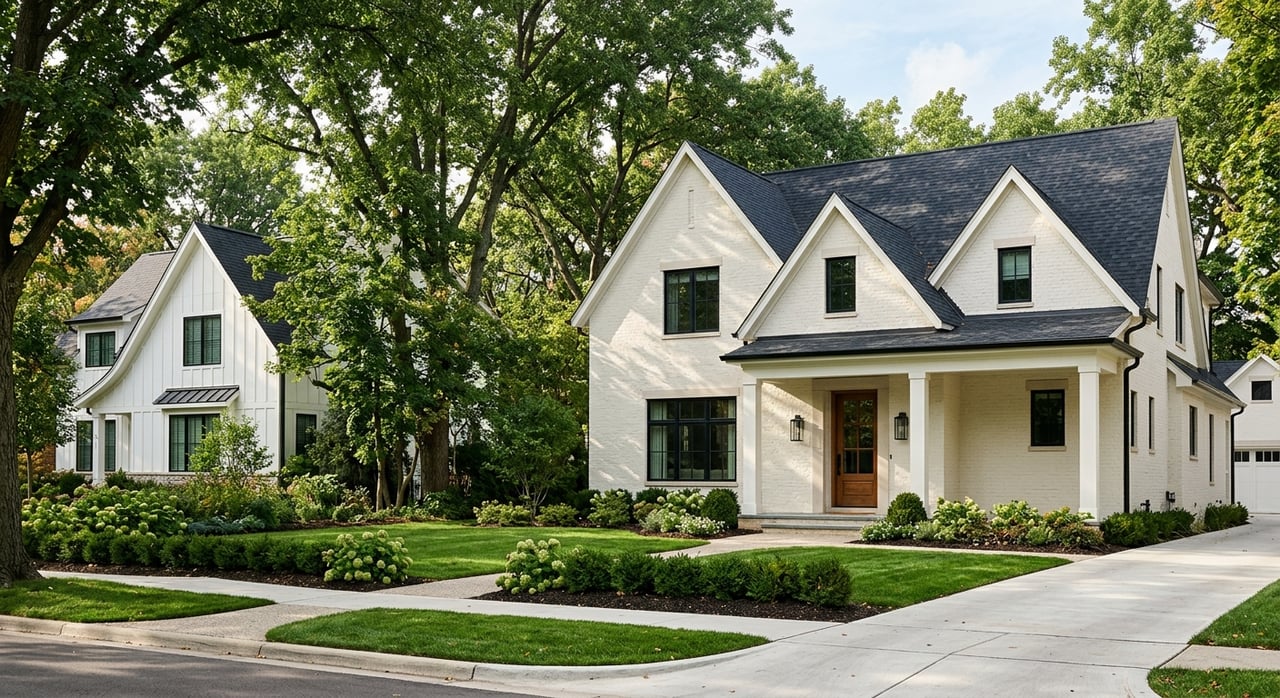
East Cobb’s housing stock helps explain why so many swim and tennis neighborhoods feel established and mature. Cobb County’s consolidated plan says the county housing stock is heavily oriented toward low-density, single-family development, with 71 percent detached homes and 7 percent attached homes.
The same county data shows that most owner-occupied homes were built between 1980 and 1999 or before 1980. Community examples in East Cobb line up with that pattern. Brookcliff’s first homes were built around 1980, and Carriage Park was established in 1991.
For you as a buyer, that means a neighborhood may offer strong community amenities and mature trees, but the condition of the house itself can vary widely. In many cases, renovation quality matters just as much as square footage.
Why condition matters in older neighborhoods
Older homes can offer established lots and a classic suburban layout, but they may also come with more maintenance questions. Cobb County notes that older housing often needs updates to roofing, HVAC, plumbing, electrical systems, and accessibility features.
That does not mean you should avoid these neighborhoods. It simply means you should compare homes carefully and look beyond cosmetic updates.
When you evaluate a home in an East Cobb swim and tennis community, pay close attention to:
- Roof age and condition
- HVAC age and service history
- Plumbing updates
- Electrical system updates
- Window and insulation efficiency
- Overall renovation quality
- Layout and accessibility features
A well-maintained older home can be a strong fit, but it is worth understanding what has been updated and what may still be on your future to-do list.
How to compare neighborhoods wisely
In East Cobb, it is often more helpful to compare neighborhoods by lifestyle and structure than by subdivision name alone. The most useful side-by-side evaluation usually comes down to four key factors.
Amenity package
Start with the basics. How many courts are there, and are they lighted? Is there one pool or more than one? Are there playgrounds, trails, fields, or clubhouse spaces that match how you actually want to live?
Association structure
Next, look at how the neighborhood is organized. A community with optional memberships may feel very different from one with amenities built into HOA participation. Fee structure and access rules matter just as much as the amenity list.
Home age and updates
Since many East Cobb homes were built in the 1980s and 1990s, condition matters. Two homes in the same neighborhood may have completely different levels of renovation, system upgrades, and long-term maintenance needs.
Location convenience
Finally, think about what surrounds the neighborhood. Proximity to East Cobb Park, Terrell Mill Tennis Center, local retail corridors, dining, and outdoor spaces like Sope Creek Trail can add flexibility to your routine.
A note on school attendance zones
If school attendance is part of your home search, it is important to verify the exact address rather than assume a neighborhood name tells the whole story. Cobb County School District says its attendance maps are approximate and directs users to confirm assignments through its address-level school finder and web query tools.
This is especially helpful in an area like East Cobb, where neighborhood boundaries and attendance lines may not align as neatly as buyers expect. Address-level verification is the most reliable step.
Is a swim and tennis neighborhood right for you?
A swim and tennis community can be a great fit if you want convenient recreation, a more connected neighborhood feel, and access to established single-family communities. It can also be a smart option if you value summer activities, nearby parks, and the kind of built-in lifestyle that makes it easier to meet people and stay active.
The key is to look closely at how each neighborhood actually functions. In East Cobb, the best fit usually comes down to the amenity package, membership structure, home condition, and location rather than the subdivision name alone.
If you are considering a move to East Cobb, working with a team that understands the differences between neighborhoods can make your search much more focused. For guidance on finding the right community fit, reach out to Christi Key for a free consultation.
FAQs
What makes East Cobb swim and tennis communities different from each other?
- The biggest differences are usually the amenity package, whether access is included through the HOA or handled through a separate membership, how active the social calendar is, and the age and condition of the homes.
What amenities are common in East Cobb swim and tennis neighborhoods?
- Many East Cobb communities include features such as pools, lighted tennis courts, clubhouses, playgrounds, trails, and open recreation areas, but the exact mix varies by neighborhood.
What should buyers check before buying in an East Cobb swim and tennis community?
- You should review whether amenities are included or membership-based, ask about the social calendar, verify the exact school attendance zone by address, and evaluate the home’s roof, HVAC, plumbing, electrical, and overall renovation condition.
What are homes in East Cobb swim and tennis neighborhoods usually like?
- Many are single-family homes in established suburban neighborhoods, with a large share of homes built between 1980 and 1999 or earlier, so updates and maintenance history are important factors.
What county recreation options support East Cobb residents beyond the neighborhood?
- Cobb County offers tennis centers, indoor aquatic centers, outdoor pools, and swim programming, and East Cobb residents also have access to places like Terrell Mill Tennis Center and East Cobb Park.
How should buyers verify school attendance for an East Cobb address?
- Cobb County School District says attendance maps are approximate, so the best step is to confirm the exact address through the district’s address-level school finder and web query tools.