Want to live inside the Perimeter without stretching your budget? House hacking can help you offset your mortgage by renting part of your home while you build long-term equity. In Atlanta, strong rental demand and limited supply make this a practical path for first-time buyers and small investor-owners alike. In this guide, you’ll learn the house-hack models that work ITP, smart financing moves, tenant tips, and where to check zoning and permits. Let’s dive in.
What house hacking means ITP
House hacking means you buy a primary residence and generate rental income from part of it to help cover your mortgage and holding costs. Inside the Perimeter, buyers often use a duplex, a finished basement or in‑law suite, or an accessory dwelling unit (ADU). These setups tap into the city’s strong rent demand near jobs, transit, universities, and hospitals.
This approach can help you lower your monthly costs while you build equity. It can also support multi-generational living or an on-site caregiver. Always verify zoning, permitting, and rental rules before you buy.
Three house-hack models that work
Duplex or 2 to 4 units
A duplex or small multi-unit lets you live in one unit and rent the others. You get clear separation with private entrances and, in some cases, separate utilities.
- Pros: Strong comps for rents, privacy between units, and well-known lender pathways for owner-occupied financing.
- Cons: Fewer listings ITP and higher purchase prices; some buildings share systems, which can complicate maintenance.
- Key checks:
- Zoning and legal status of the structure as multi-family.
- Certificate of occupancy for all units.
- Separate meters or a fair plan for utility splitting.
- Proper insurance for owner-occupied multi-unit properties.
- Lender rules on down payment and occupancy period.
Finished basement or accessory living space
A finished basement or lower-level suite can be a cost-effective way to rent part of a single-family home. You stay in control since everything is under one roof.
- Pros: Often cheaper than buying a duplex; easier to manage on-site.
- Cons: May not qualify as a legal dwelling without proper egress and fire separation; moisture risks if not built to code; insurance can differ.
- Key checks:
- Building code for egress windows, ceiling height, and fire separation.
- Permitted plumbing and electrical for separate occupancy.
- Local rules on what counts as a legal dwelling versus shared space.
ADUs and carriage-house conversions
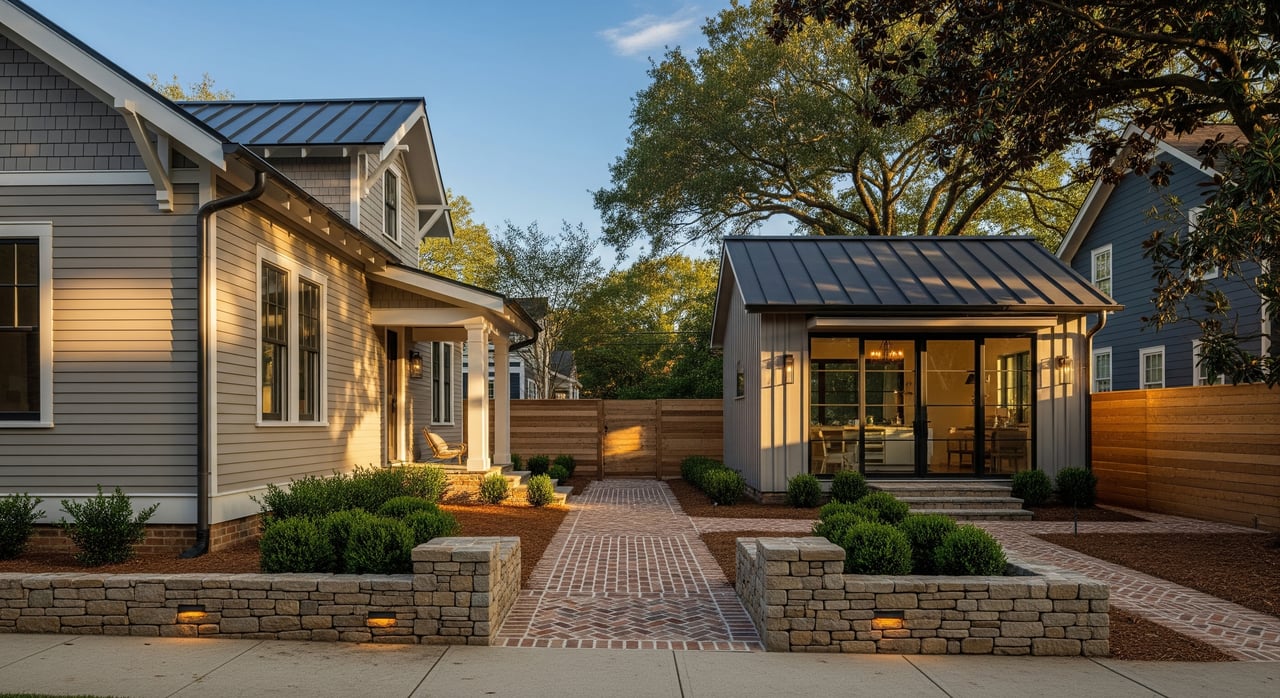
An ADU can be a detached structure, a garage conversion, or an attached accessory unit on the same lot as your home. It can command strong rent per square foot and add value.
- Pros: A fully separate rental with strong income potential; can boost resale value.
- Cons: Upfront permitting and construction costs; setback, height, and parking requirements; HOA limits in some areas.
- Key checks:
- Whether your lot’s zoning allows ADUs and in what form.
- Utility tie-ins for sewer, water, and electric.
- Parking requirements and any neighborhood design standards.
Financing options for owner-occupants
Financing is often the key to a successful house hack. Owner-occupied loans usually offer lower down payments and better rates than investor loans, but rules vary.
- FHA loans: Common for 1 to 4 unit purchases with low down payment, typically around 3.5% for eligible borrowers. Expect mortgage insurance and property condition standards.
- Conventional low-down-payment programs: Some allow 3% down for eligible buyers, with stricter credit and reserve requirements. Multi-unit rules and down payments vary by program.
- VA loans: For eligible veterans and active-duty buyers, sometimes allow 0% down for owner-occupied purchases, including certain multi-unit scenarios. Confirm unit limits and occupancy.
- Portfolio or local lenders: Community lenders and credit unions may offer flexible products for 2-unit homes or renovation needs.
- Down payment assistance: State or local programs change often. Check Georgia-level programs and City of Atlanta options for eligibility and funding.
Underwriting and planning essentials
If you’re eyeing a duplex or small multi-unit, plan for extra lender documentation and reserves. Many lenders will consider a portion of projected rent when qualifying.
- Multi-unit notes: FHA can allow 2 to 4 units with low down payment for owner-occupants. Conventional options may require more down for 2 to 4 units and have program-specific rules.
- Rental income in qualifying: Lenders may count part of projected rent if you provide leases, rent comps, or a market rent schedule.
- Borrower profile: Higher credit scores help with rates. Expect potential reserve requirements, and watch your debt-to-income ratio.
- Appraisal and insurance: Legal, permitted units appraise and insure more cleanly. You may need landlord liability coverage for rental activity.
A simple financing checklist
- Talk to lenders early and compare programs for 1-unit versus 2 to 4 units.
- Prepare rent comps and note whether lenders will count projected income.
- If renovations are needed, look into renovation-capable loans or separate construction financing.
- Consult a tax professional on rental income, depreciation, and homestead impacts.
Attracting and keeping great tenants
Your goal is steady demand, smooth operations, and minimal vacancy. Focus on features that rent well ITP and clear communication.
- What renters want: Separate entrances, privacy, quiet, and in-unit laundry. Updated kitchens and baths, reliable internet, and off-street parking can increase demand.
- Location benefits: Proximity to MARTA, hospitals, universities, and neighborhood retail can help justify strong rents.
- Marketing: Use professional photography and simple floor plans. Tailor lease lengths to likely tenant profiles, such as students or relocating professionals.
Lease terms, screening, and utilities
- Use a written lease that spells out shared spaces, parking, noise, pets, and guest policies.
- Document the condition at move-in and collect a security deposit.
- Screen consistently under fair housing laws with credit, criminal, and rental history checks.
- Decide on utilities: separate meters, utility caps, or an addendum to avoid underpricing.
Safety and compliance basics
- Know Georgia landlord-tenant rules and City of Atlanta requirements.
- Confirm any rental registration or business licensing.
- Install and test smoke and carbon monoxide detectors; confirm proper egress and electrical safety.
- Short-term rentals have specific city rules and may face neighborhood or HOA restrictions. Verify before you plan an Airbnb strategy.
Zoning, permits, and compliance
Local rules shape what is possible on a specific parcel. Check zoning and permit history before you buy or start work.
- Primary resources: City of Atlanta Department of City Planning and zoning pages; City of Atlanta Code of Ordinances; Fulton County Planning and Development; Atlanta municipal GIS and property search portals.
- Mortgage and assistance resources: HUD for FHA, Fannie Mae and Freddie Mac product pages, Georgia Department of Community Affairs for down payment assistance.
Step-by-step property verification
- Look up the parcel and zoning in Atlanta’s GIS or Fulton County parcel maps.
- Confirm permitted uses for that district, including duplex or ADU rules, setbacks, and size limits.
- Review permit history and certificates of occupancy for existing conversions.
- If planning a basement finish or ADU, review current ADU standards and any parking or notification requirements.
- Contact City of Atlanta planning staff or a zoning intake planner for parcel-specific questions and keep written notes.
- Confirm long-term rental or short-term rental registration and licensing steps.
- Pull building permits for any renovations and schedule required inspections.
- Talk with your insurance agent about the right coverage before a tenant moves in.
Your ITP house-hack action plan
- Identify target ITP neighborhoods and gather comparable rents and sale data.
- Speak with 2 to 3 lenders who handle owner-occupied multi-unit and renovation loans.
- Pull zoning and permit history for each property you consider.
- Get preliminary bids and feasibility feedback from licensed contractors or an architect.
- Confirm insurance needs and any city rental registration steps.
- Consult a CPA about rental income, taxes, and homestead exemptions.
- Secure permits and inspections before listing any unit for rent.
Ready to run the numbers on an ITP house hack or tour properties that fit these models? Let’s map out a plan that balances lifestyle, financing, and zoning so you can build equity with confidence. Reach out to Christi Key to start your strategy session today.
FAQs
Can you buy a duplex ITP with a low down payment?
- FHA commonly allows about 3.5% down for eligible owner-occupants on 1 to 4 units; some conventional programs offer 3% down but may limit it to 1-unit homes or add restrictions. Confirm with a lender.
Will a finished basement or ADU raise my property taxes?
- Likely, since added livable square footage or a legal additional unit can increase assessed value. Check with local assessors for specifics.
Can lenders count rental income when I qualify?
- Often a portion can be counted with proper documentation, such as leases, rent comps, or a market rent schedule, subject to program rules.
Are short-term rentals allowed inside the Perimeter?
- Atlanta has specific short-term rental rules and licensing requirements, and some neighborhoods or HOAs limit them. Verify current city rules before pursuing.
Do HOAs allow ADUs or rentals?
- HOAs can restrict ADUs and rentals. Review the declarations and contact the board before you buy or build.